I purchased the following Andre Norton paperbacks with covers by Jeffrey Jones on Monday from a small shop in Yorkton, Saskatchewan. I found the shop totally by accident. My wife, our son, and I were en route to Dauphin, Manitoba, but since we were ahead of schedule and had some time to kill before lunch in Yorkton, we decided to drive around a bit and see what stores were open in the downtown area. We went up and down a couple of streets, and then we noticed a shop called “Thrifty Mama’s” that had a display of books in the window. Being a trio of bibliophiles, we couldn’t resist checking it out — and discovered that at least half of the floorspace in “Thrifty Mama’s” is dedicated to used books, mostly paperbacks. Score!
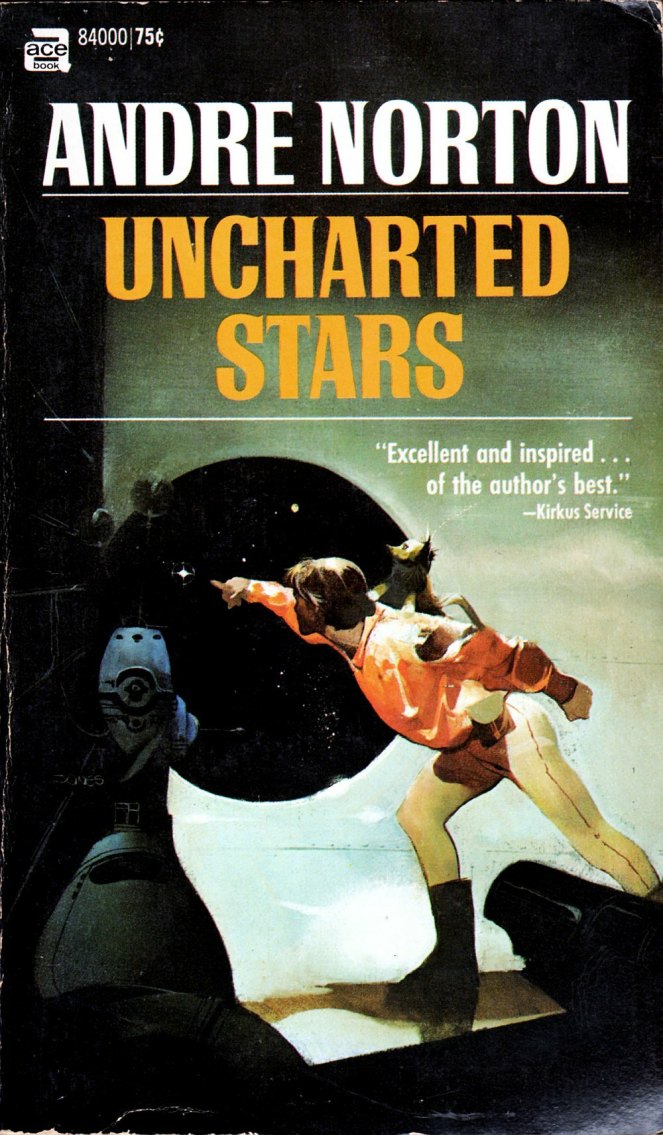
Now, I know I’ve posted the cover of Uncharted Stars before, but the book this time around is in much better condition. In fact, all four are really glossy and tight. And they all sport excellent Jones covers. Enjoy!
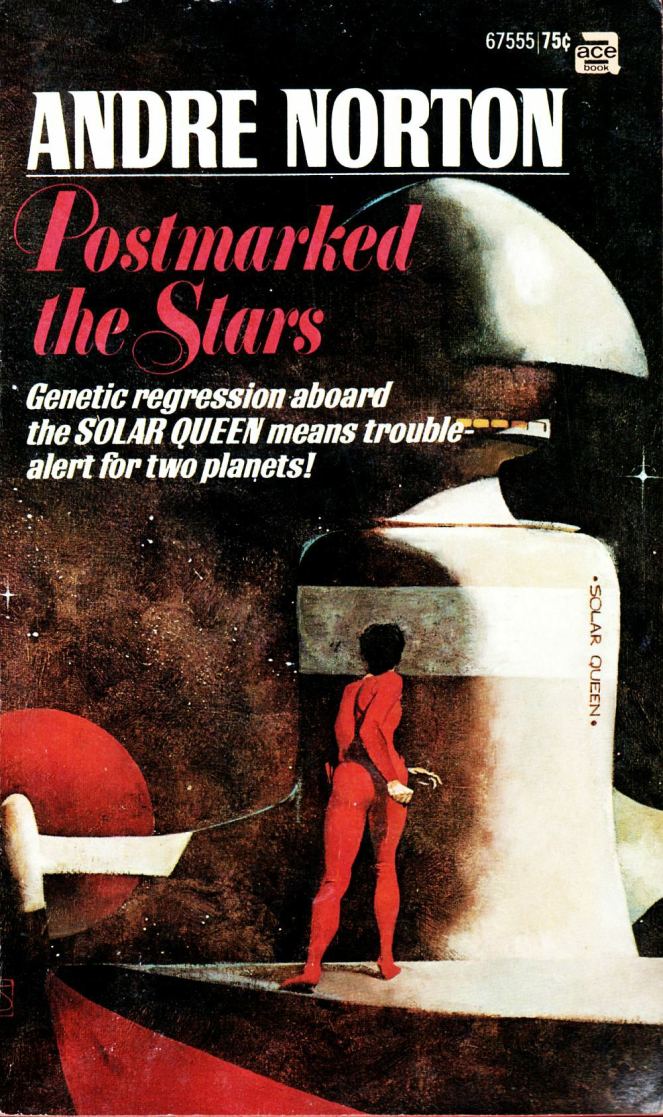
- ABOVE: Andre Norton, Postmarked the Stars (New York: Ace, 1969), with cover by Jeffrey Jones.
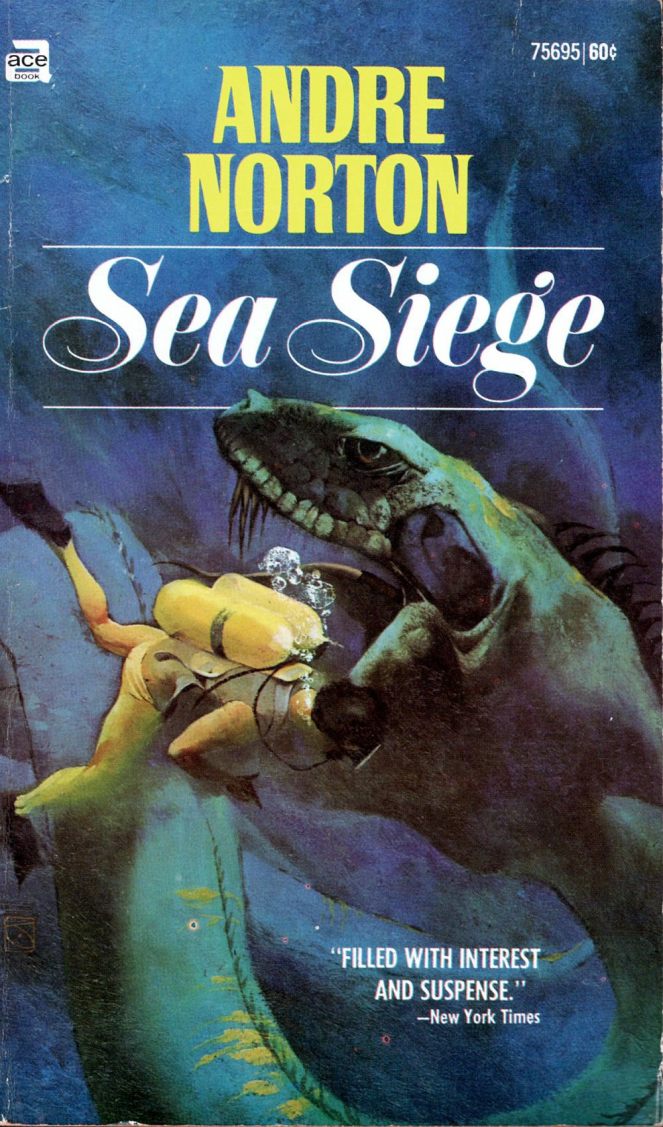
- ABOVE: Andre Norton, Sea Siege (New York: Ace, n.d. [1970]), with cover by Jeffrey Jones.
- ABOVE: Andre Norton, Uncharted Stars (New York: Ace, n.d. [1970]), with cover by Jeffrey Jones.
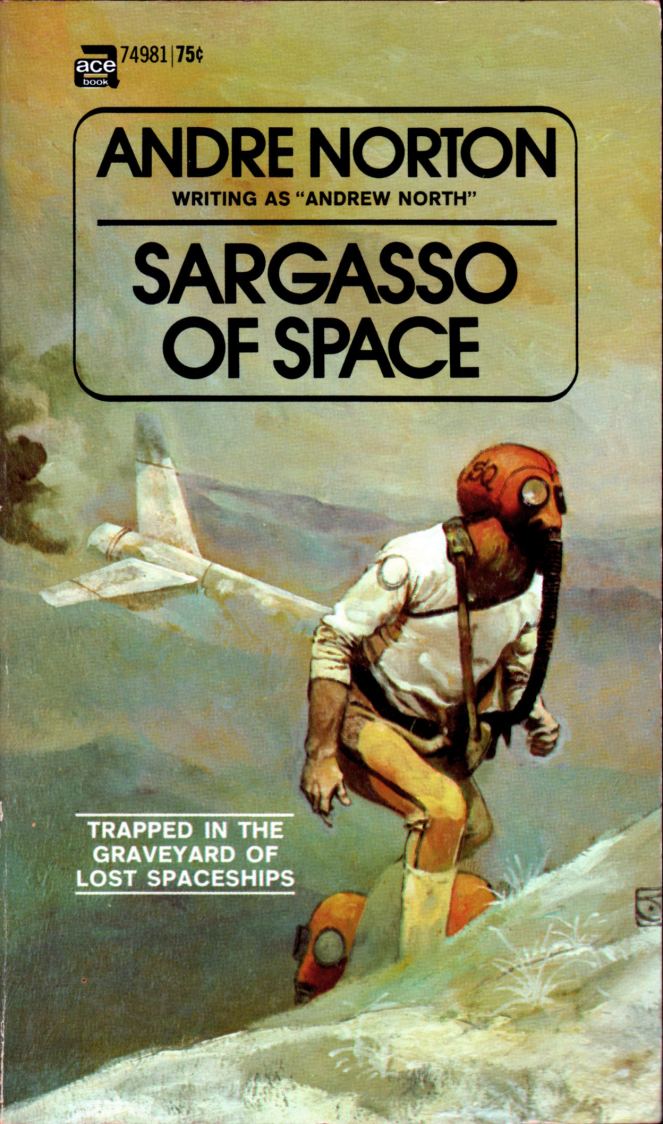
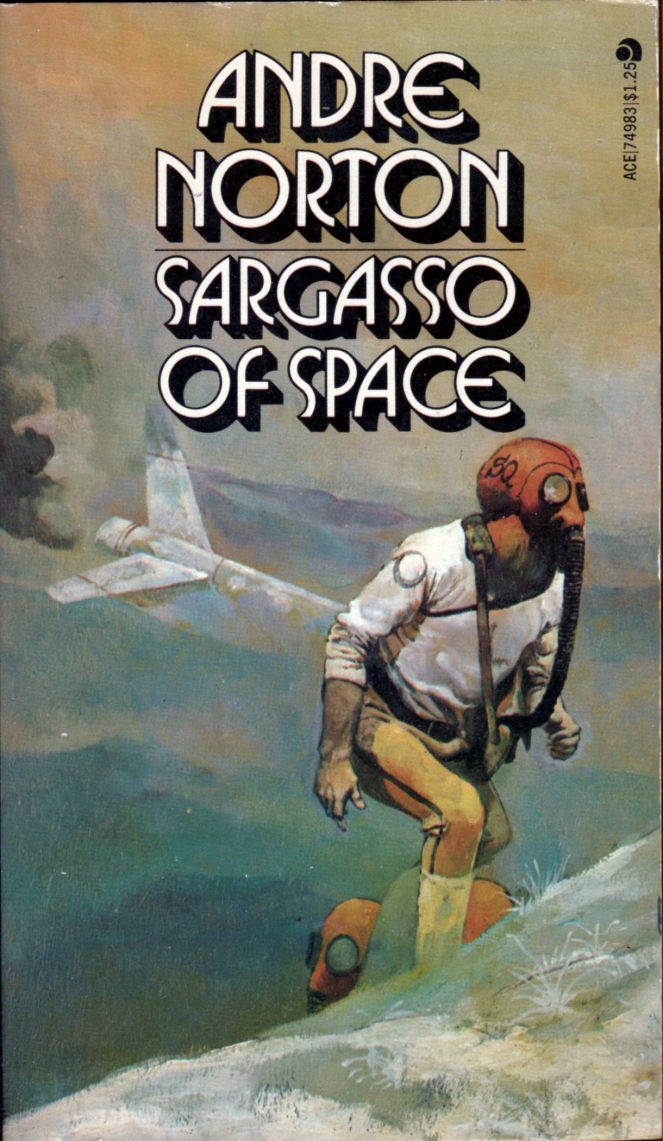
- ABOVE: Andre Norton, Sargasso of Space (New York: Ace, n.d. [1971]), with cover by Jeffrey Jones.


Several of those I’ve never before seen; thanks for posting these! Jones has given each cover a distinct colour pallette.
Jones probably used reference photos of himself in preparation for painting these covers. Below you can see photo-reference (from his own website) of a model prior to painting “The Age of Innocence.”
http://www.jeffreyjones-art.com/reference4.html
http://tinyurl.com/22vfyr4
Thanks for the links, Chris. Although I myself have seen everything on Jones’s official site, those fans of Jones’s work who haven’t will undoubtedly find it interesting and instructive to view the artist’s photographs alongside the finished works.
Of course, it’s standard practice for commercial artists to use themselves and their friends as models, and to work from reference photographs rather than from life. To a large extent, it’s about speeding up production to meet external deadlines.
Which also, in part, explains the widespread use of swipes in commercial art.