Archive for the Look Here Category

I don’t much care for any of these covers from 1968 and 1969, but since I have yet to break out of the collector/completist mentality — and believe me, I’ve tried — here they are, scanned and posted for your “enjoyment”:

To make up for the lacklustre art this time round, my next post will feature two covers by Jones from the early 1970s that I think are very strong, along with one that I have mixed feelings about, so stay tuned for that!

Has Muth’s early work in comics ever been reprinted? Not that I know of, and it’s a damn shame, too!

Like it? Enough to buy it? If your answers are yes, and yes, you’re in luck, because the current owner has it listed for sale at US$600. Contact information is available on this Comic Art Fans page.

Rightly or wrongly, I have long thought of Muth’s style at the beginning his career, when he drew the above stories, as “School of Jeffrey Jones.” There are, however, definite similarities between Muth’s painting style and palette and Alan Lee’s watercolour illustrations of the late 1970s* and beyond; so much so that it wouldn’t surprise me if Lee’s work was also, as much as Jeffrey Jones’s, an influence on the “look” of “Small Gifts” and, especially, “Pursuit.”

* The first edition of Faeries by Lee, Froud, et al., appeared in 1978.

If you have been following my posts over the past few days, you’ll already know why I decided the time was right to scan and post this:

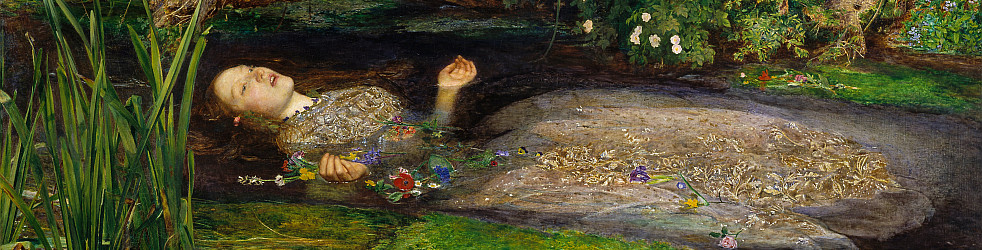
If you have not been following along, click here to jump to my post on Lucian Freud’s The Painter Surprised by a Naked Admirer.

Whenever I see SF paperback covers by Paul Lehr like the nine I posted yesterday, and the many others he created in a similar vein, I immediately think of Arnold Böcklin’s “Isle of the Dead” paintings and, to a lesser extent, ”The Sacred Wood”:

I was tempted to file the comparison between Böcklin and Lehr under “Call and Response,” but I guess I am just not quite convinced myself that there’s any direct influence from one to the other — although the impossibly jagged cliffs in Lehr’s cover for Zelazny’s Isle of the Dead (strange coincidence!) are tantalizingly similar, visually, to the trees in Böcklin’s “Isle of the Dead” variations. Or maybe I’m just seeing things!

From the bookshelves of yours truly, here are nine paperback covers (ten, actually; a bonus image was added at a later date) by Paul Lehr, along with one Lehr-ish cover by another hand:

The sequence, Jongor of Lost Land (1940; repr. 1970), The Return of Jongor (1944; repr. 1970), and Jongor Fights Back (1951; repr. 1970), reminds me of the first Star Wars trilogy: Star Wars (1977), The Empire Strikes Back (1980), and Return of the Jedi (1983). Purely coincidence, I’m sure. LOL!

Here is the second in what is turning out to be a series of posts here at RCN featuring obscure SF book covers by Frank Frazetta. The first “obscure SF book cover” is over here.

Although Frazetta has plenty of classic covers to his credit, the cover for Time War is not one of them; this, despite the fact that Frazetta was, I think most fans of fantasy illustration would agree, at the height of his powers as a draftsman and cover artist around the time he painted it. Simply put, Time War is the epitome of an inadequately developed, compositional cliché wedded to flashy but underdeveloped, even desultory, technique.

Go in with me, and I will tell you my drift.

The controlling compositional idea here, bog-standard in illustration art, is to use something or someone in the foreground, often in shadow or silhouette, to frame and direct attention to something or someone of interest in the more brightly illuminated middle distance. In Frazetta’s uninspired variation on this idea, the main figures, which dominate the foreground, are turned away from the viewer and are looking off into the distance at a glowing planet from which several figures are emerging. Never mind the problem of where the foreground figures are standing, exactly, to give them such a view, the real difficulty here — the two-pronged problem that prompts me to label the painting “uninspired” — is that what they (and we) are given to look at and react to in the distance is neither in their direct line of sight — the foreground figures, the man and the woman, appear quite clearly to be looking at a spot below and to the right of the distant, stiff, faceless background figures — nor is the presumed threat, i.e., those distant, stiff, faceless background figures, anywhere near as visually compelling, beyond the lurid colours of the planet from which the threat is emerging, as the hero’s shirtless torso and heavily muscled arm and the woman’s shapely rear.

Aye, there’s the rub: as many of his fans have become aware over the years, when left to his own devices, Frazetta will seize any excuse, no matter how flimsy, to feature bare buttocks in a painting! Not that there’s anything wrong with bare buttocks (or gestural, flowing hair, or gnarled roots, or moss-covered deadfall, or any of the other elements that have become clichés of the Frazetta style), but the plain truth is that 1) nudity is neither necessary nor sufficient to create a first-rate paperback cover (and especially not an SF cover!), 2) nudity can very easily be fallen back upon as a titillating, eye-hooking substitute for real engagement and effort on the part of the artist, and 3) the nude figures here have been left mostly underpainted, with little of the impasto overpainting in the areas where the light is strongest that ordinarily gives Frazetta’s painted figures their variety, their three-dimensional solidity, and their overall liveliness. Yes, the figures are sort of in shadow, which accounts for the lack of detail, but in my view, they take up far too much of the composition to be left so under-developed.

That Frazetta himself recognized the inadequacy of his own work here is perhaps reflected in the following trio of facts: 1) Frazetta revised the painting after he got it back from the publisher; 2) the revised version has only been reproduced in one of the books on his art produced with his participation and blessing (see Arnie Fenner and Cathy Fenner, eds., Legacy: Selected Drawings & Paintings by Frank Frazetta [Underwood Books, 1999], p. 167); and 3) the original version has been reproduced, well, never. And although in the revised version both figures are completely nude, and their naked flesh has been brought to a level of finish it previously lacked, and the man is now brandishing a non-existant gun (seriously!), and the man’s right foot has morphed into a curious form that is neither foot nor boot, and the man’s genitalia, which common sense says should be clearly visible from this angle, is some strange configuration that is neither penis nor codpiece, and the woman’s hair is even more insistently Frazetta-like, and her backside is even larger and more moon-like, I say, even though Frazetta has made all these changes, the composition remains egregiously under-motivated, uninspired, and unconvincing.

Here’s a somewhat juicier image of a landscape painting by Jeffrey Jones that I posted a few days ago:

Notice the new information about the title, date, and size. That’s always great to have.

Here, as promised in a previous post, are all of the Idyl strips that I saved from Jeffrey Jones’s long-abandoned Web site:

I thought I only had four strips on hand; turns out, I have five. Enjoy!

UPDATE:

Ragged Claws Network: Look There: “Idyl” by Jeffrey Jones

  • Viagra online
  • Order cheap cialis
  • Buy viagra no prescription
  • Cialis online
  • Buy generic cialis
  • Order propecia no prescription
  • Cheap propecia online
  • Propecia online pharmacy
  • Order levitra online
  • Cheap price cialis
  • Online pharmacy levitra
  • Buy viagra online
  • Buy discount levitra
  • Cheap cialis online
  • Propecia hair loss